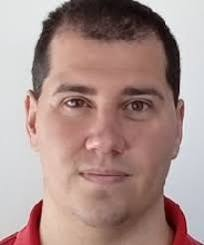
Jorge Ricardo Alonso Fernández
PhD Candidate · Bioinformatics Unit · BIO-HPC · UCAM Universidad Católica de Murcia
Predoctoral researcher applying mathematics, biochemistry and computational modelling to drug discovery, with a focus on consensus methods for virtual screening and target prediction.
About
Jorge holds a BSc in Biochemistry from the Universitat Autònoma de Barcelona (2021) and an MSc in Bioinformatics from the University of Murcia (2023). Since July 2024 he has been a predoctoral researcher (PDI) at UCAM, working on his PhD at the Bioinformatics Unit within the HiTech Innovation Hub.
Trained originally in pure sciences with a strong background in mathematics, Jorge has redirected his interests toward biomedicine with the long-term goal of contributing to human health and aging research. His work is markedly interdisciplinary, combining biochemistry, molecular biology, computational modelling and the development of bioinformatics tools.
His research focuses on computational methods for drug discovery, protein-ligand interaction analysis and therapeutic target prediction. He has contributed to international collaborations on systems as diverse as the mosquito odorant binding protein OBP4, the estrogen-related receptor ERRα, NNMT and the EP3 receptor in cardiovascular disease.
Research focus
Consensus virtual screening
Optimization of predictions through consensus techniques for target fishing and ligand screening across diverse therapeutic targets.
Molecular dynamics support
Computational support to collaborative projects via molecular dynamics simulations on systems related to fungi, metabolism and cell signalling.
Tooling & pipelines
Massive docking analyses, improved annotation of saccharide ligands in the PDB, and optimization of scripts and pipelines for large-scale data analysis.
Selected publications
- Discovery and Functional Validation of EP3 Receptor Ligands with Therapeutic Potential in Cardiovascular Disease.
- Essential Oil Derived Compounds Target Core Fatigue-Related Genes: A Network Pharmacology and Molecular Docking Approach.